
Python Library for Experimental Science and Technology
From instrument to report, one shared platform.
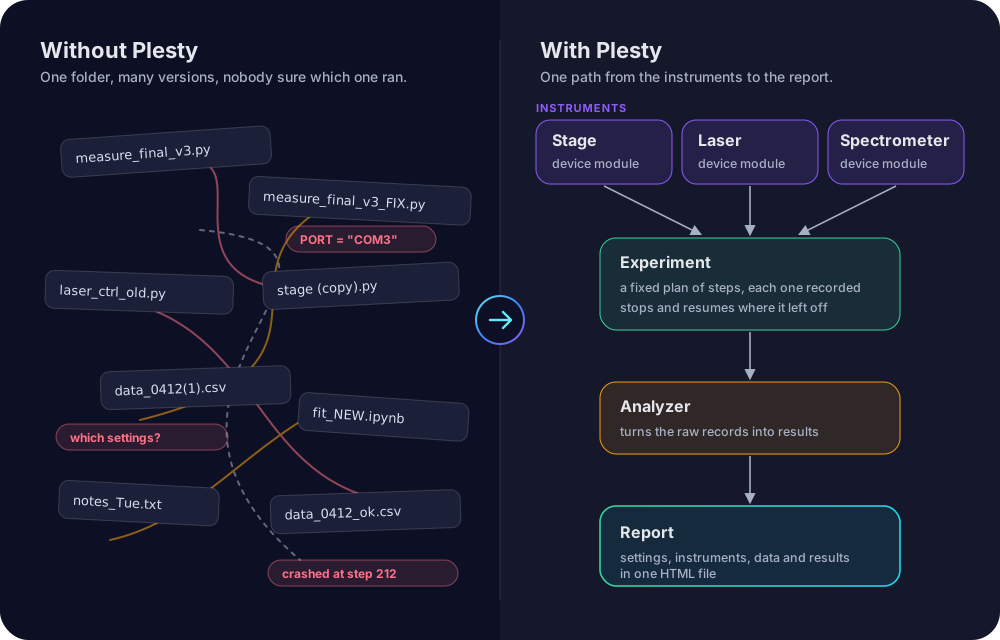
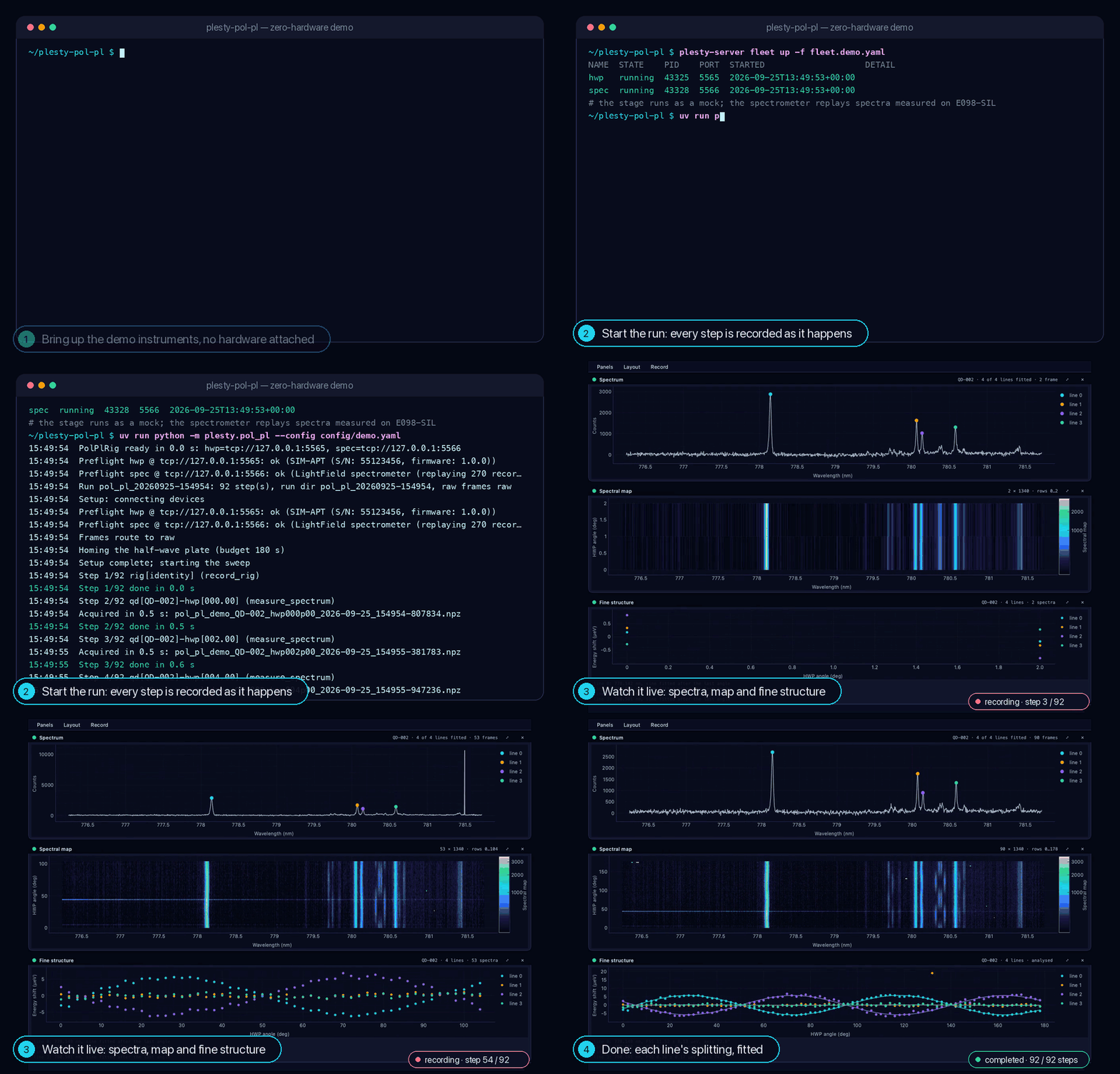
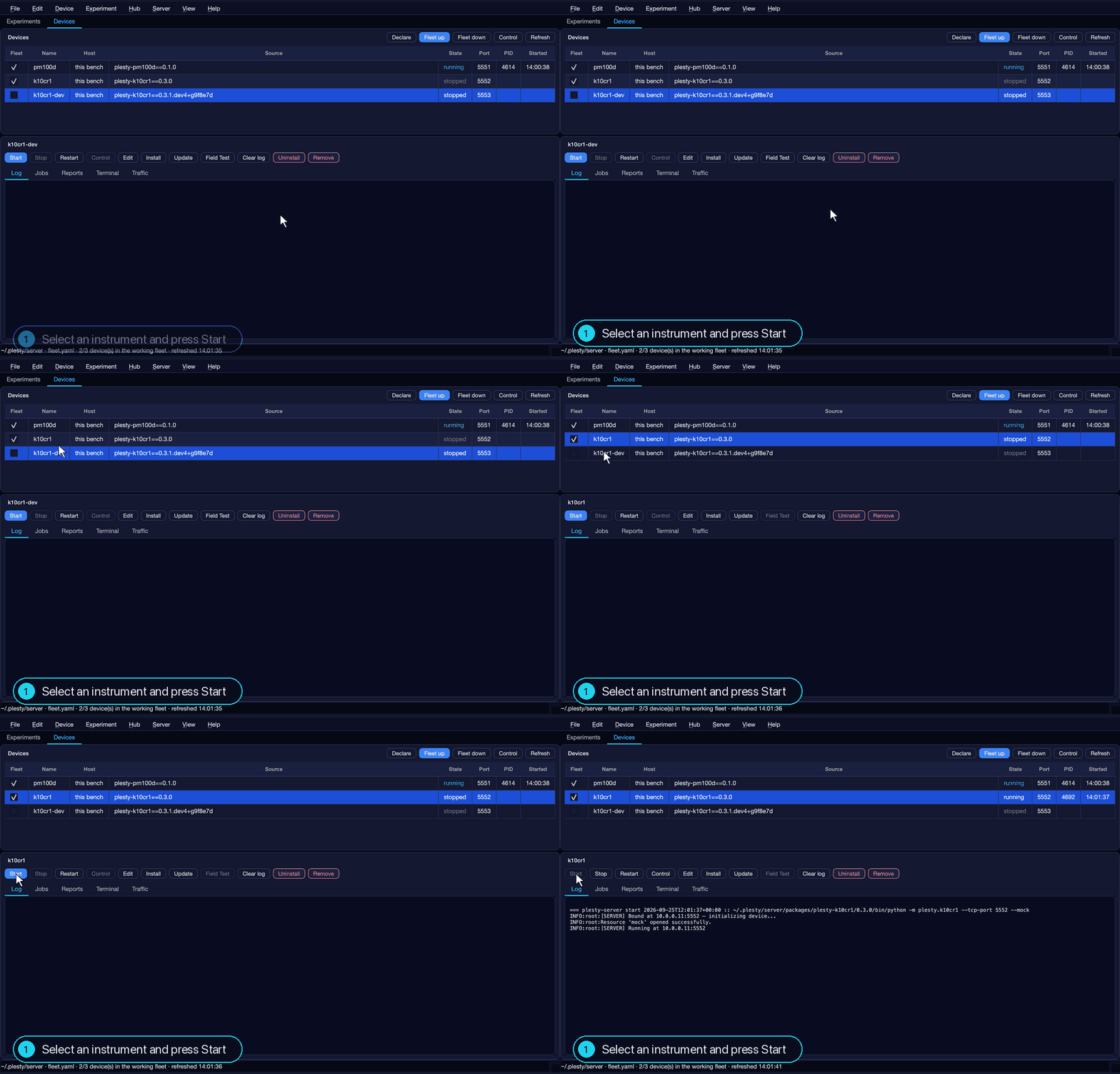
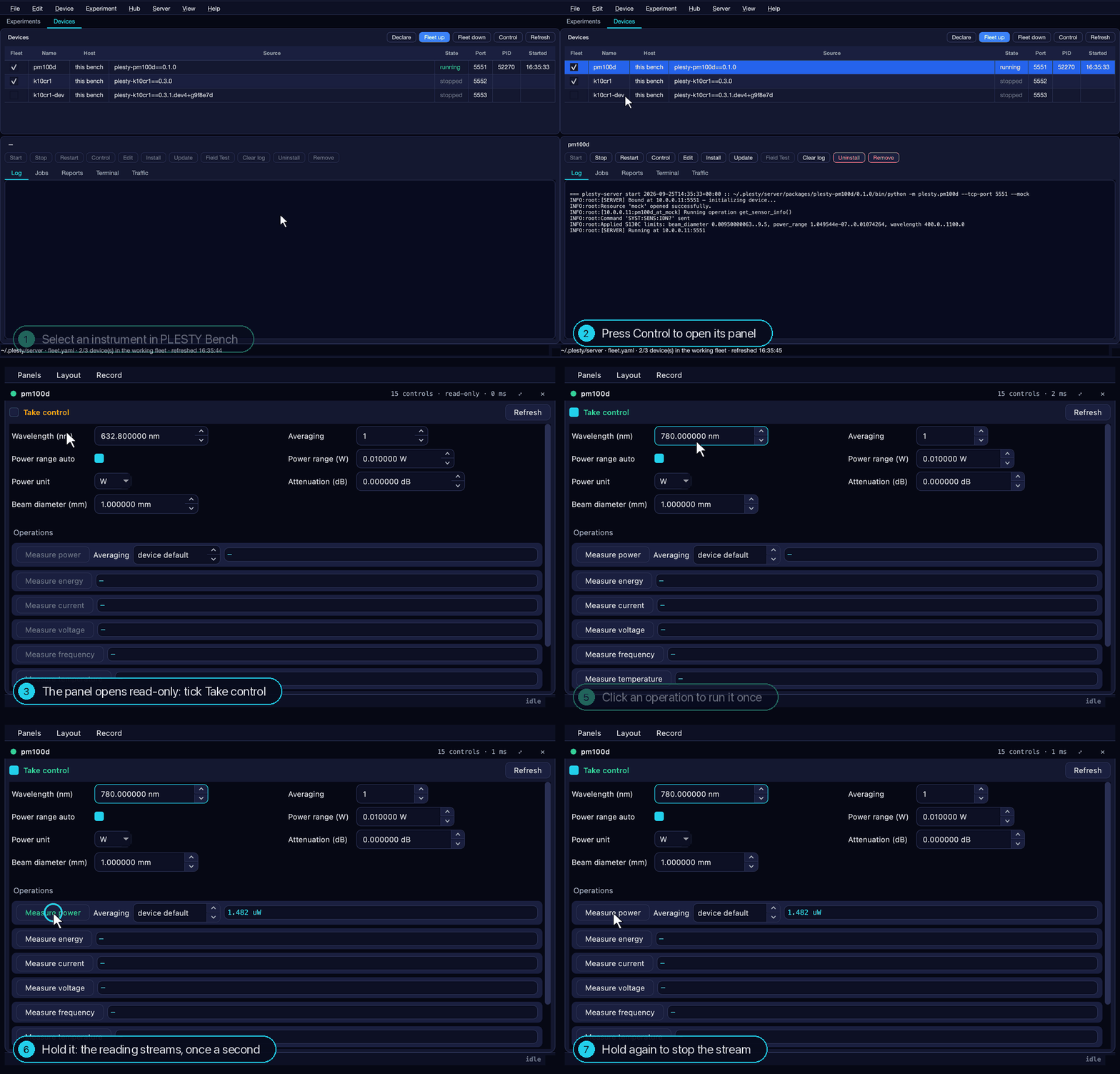
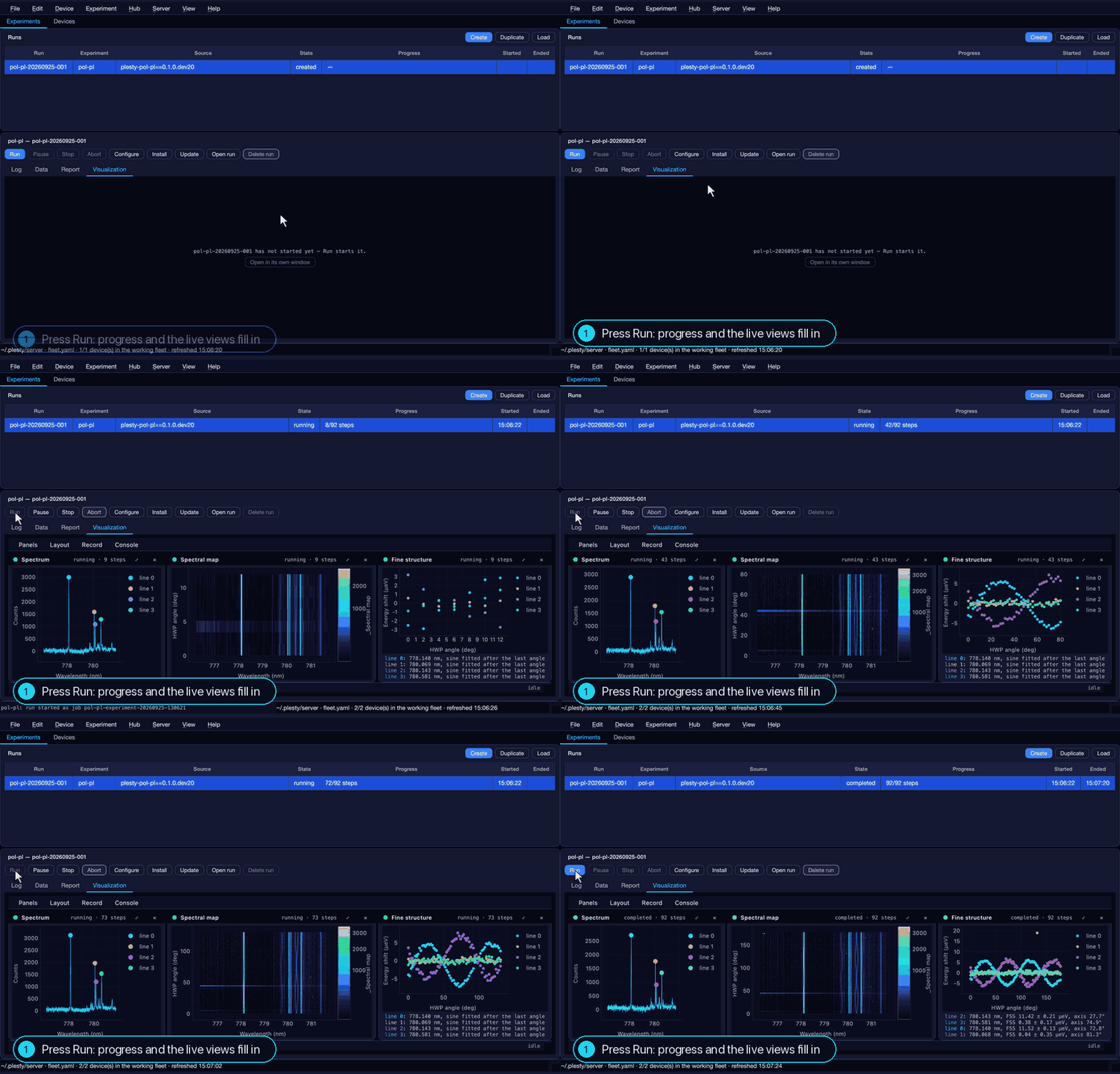
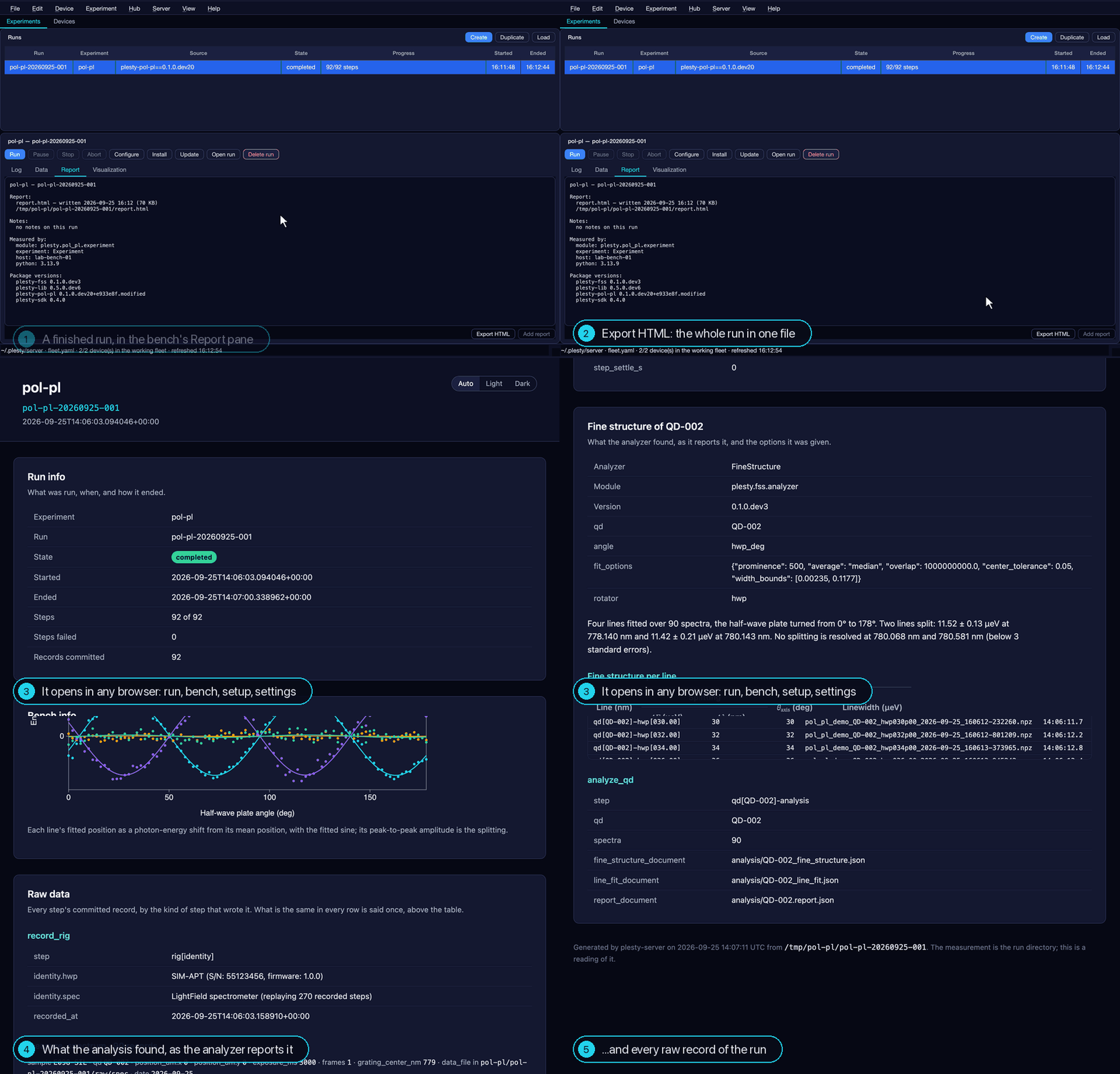
Every instrument becomes a Python module that labs share through the hub. Experiments are built from those modules, run and watched from PLESTY Bench, and every run leaves a report of what it did. Try it on your laptop first: the demo replays a real photoluminescence measurement, with no hardware attached.
Build your own experiment
Your instruments, your measurement.
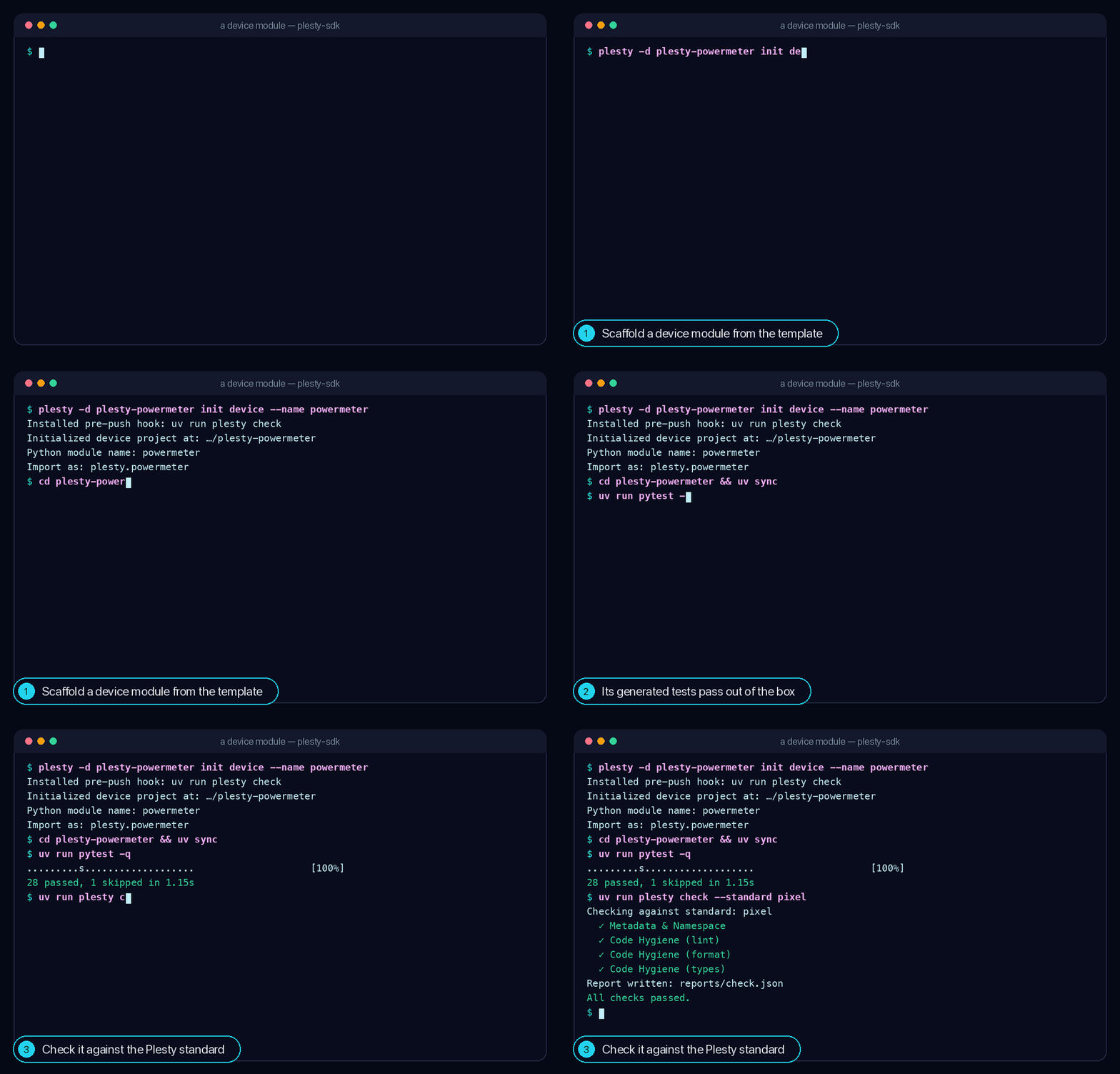
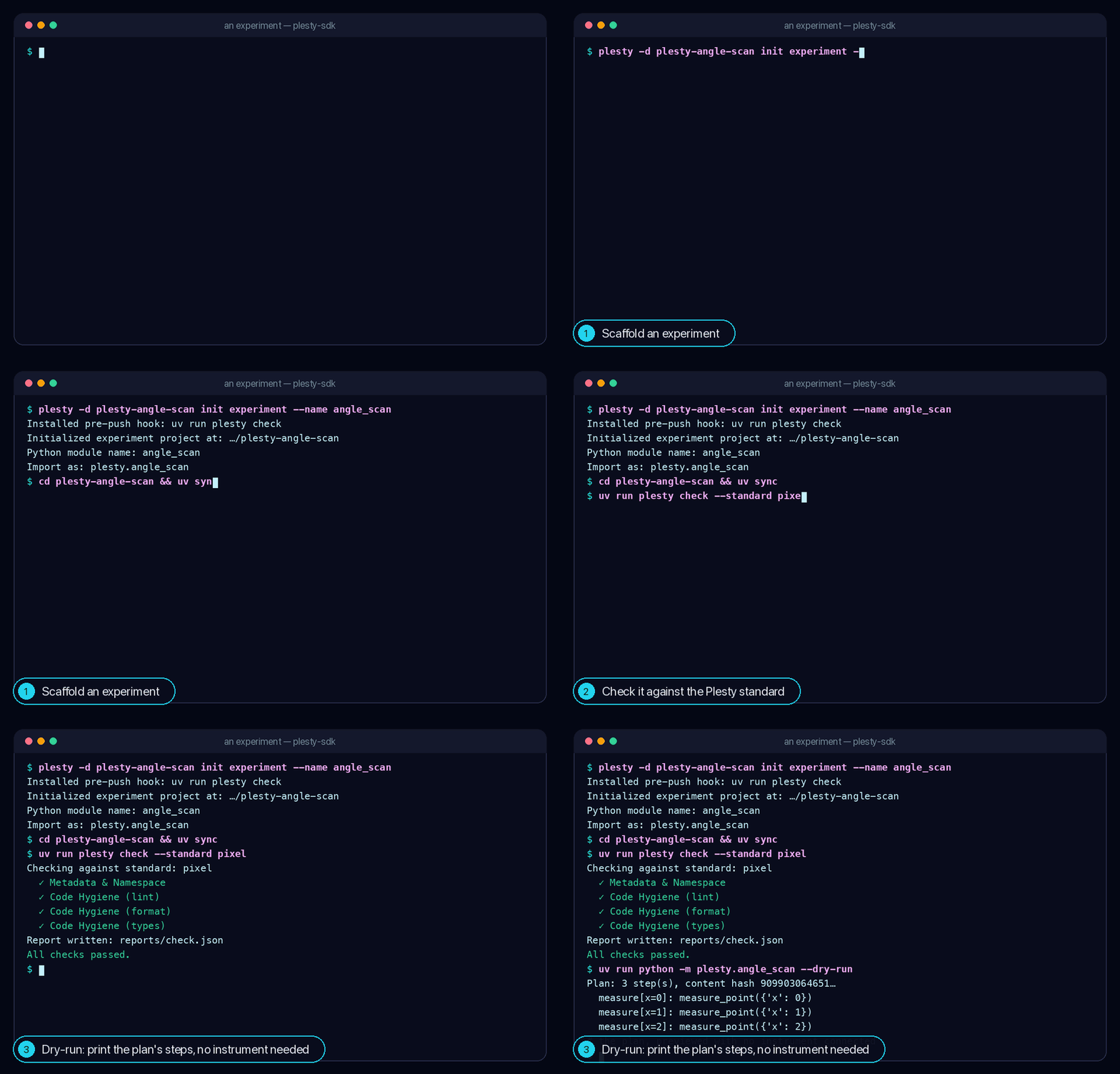
Everything above is built from parts you can write yourself: a Python package per instrument, an experiment that combines them, and the tooling that tests and publishes both. Two guides take you from an empty folder to a device and a measurement running on a bench.
One ecosystem
Standards, SDK, and shared lab modules in one loop.
Plesty combines reusable software components, documentation automation, and project checks into one CI/CD-friendly system for experimental science.
PlestyLib
Reusable Python components for devices, experiments, data, and automation patterns.
- Standardized interfaces
- Device-oriented modules
- Experiment-ready abstractions
PlestySDK
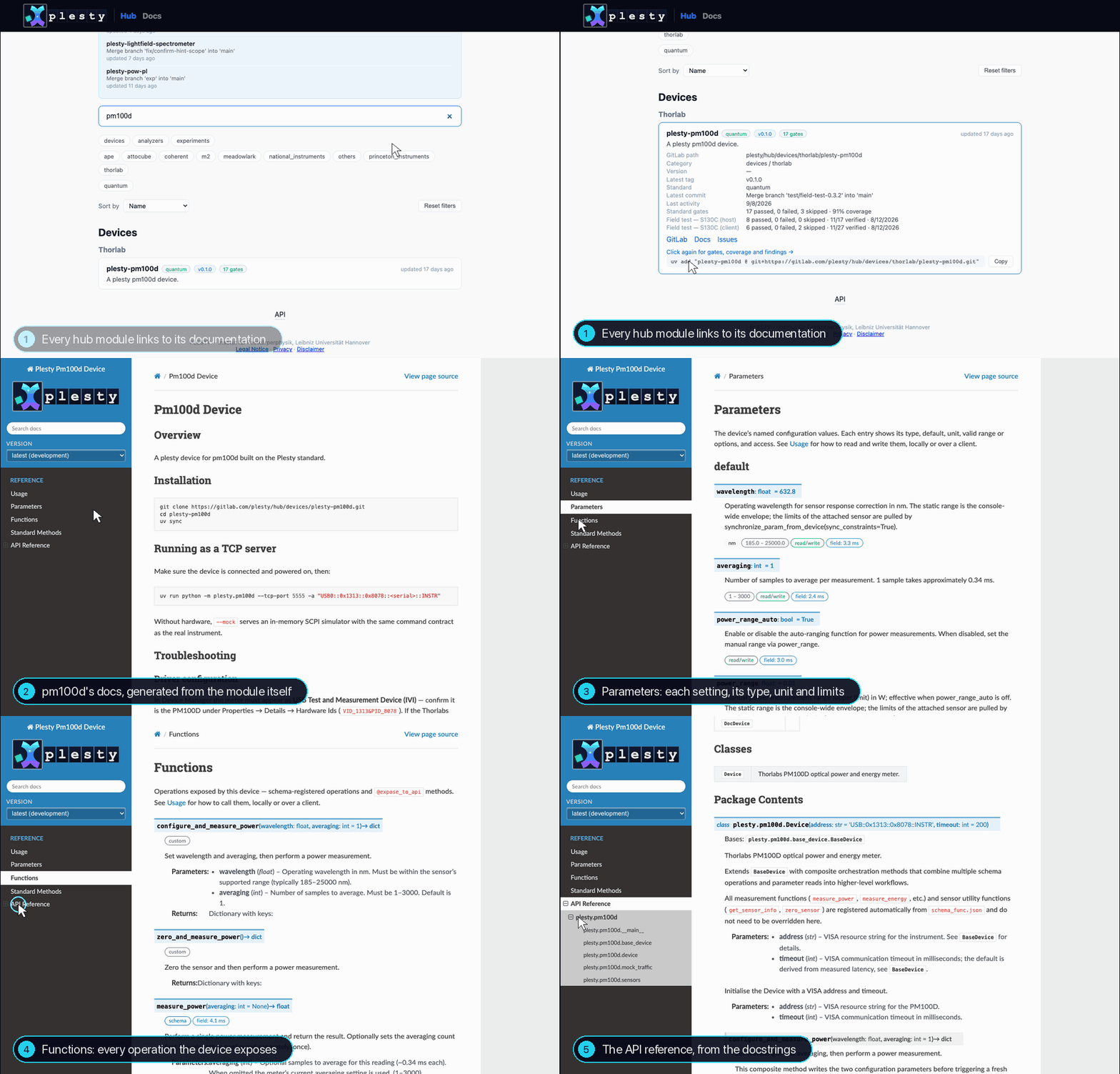
Project scaffolding, documentation generation, standard checks, and CI/CD integration.
- Project scaffolding via templates
- Sphinx docs from Python docstrings
- Automated testing and deployment
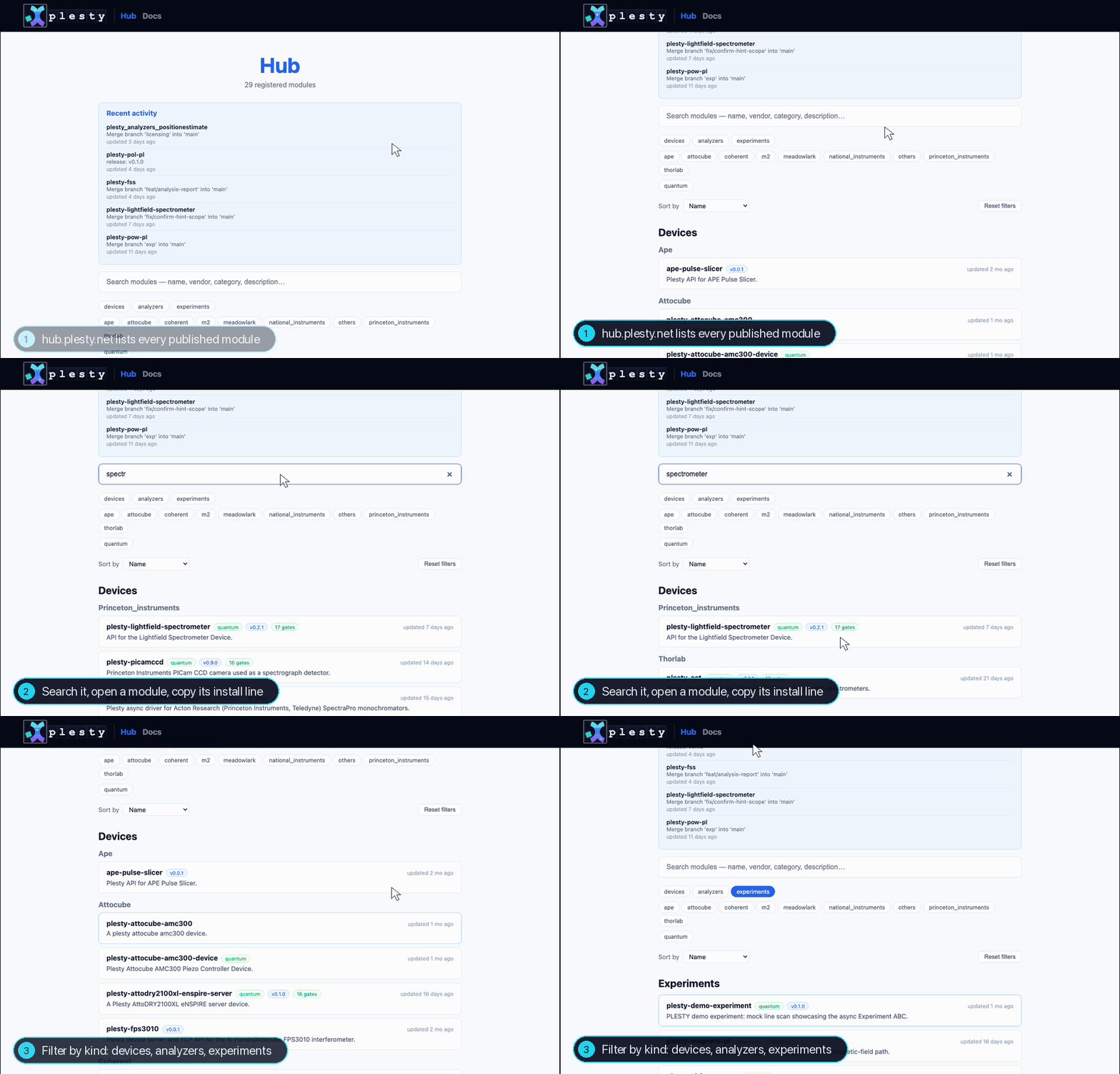
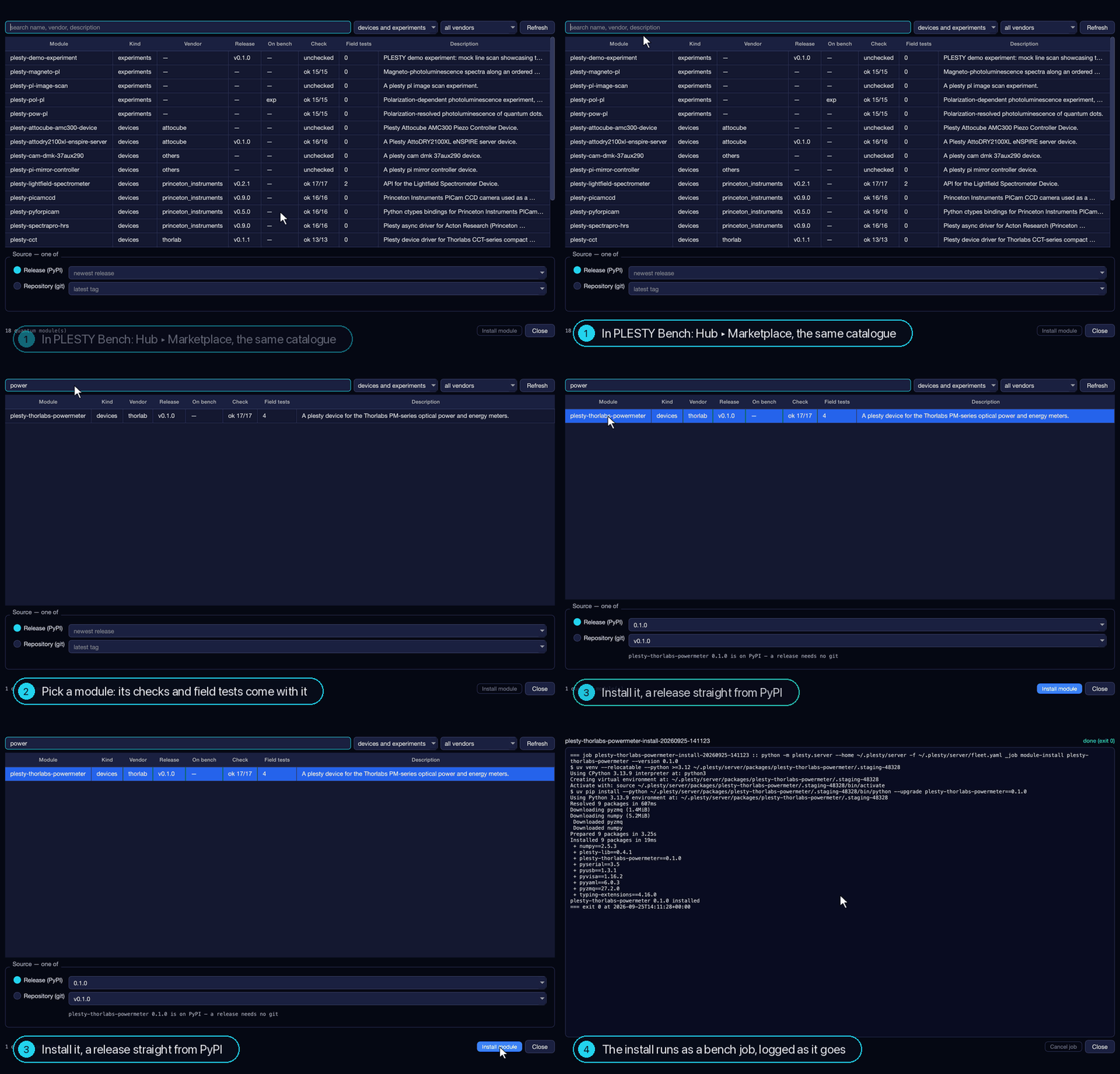
PlestyHub
The catalog of published devices, analyzers, and experiments.
- Reusable device catalog
- Reproducible experiments
- Community ecosystem
Join us
Build Plesty with us.
Ask questions, share the instrument you are wrapping, and meet the labs already measuring with Plesty. Researchers and developers alike are welcome.